On our way to respectful flying

Being an airline is fantastic, we connect people, cultures, and businesses from all over the world. At the same time, flying causes CO₂ emissions and has further climate impacts. We are aware of our responsibility to reduce the environmental footprint of our operations wherever possible. A responsibility we do not take lightly. 

As part of our efforts to reduce carbon emissions, Brussels Airlines, together with the Lufthansa Group, is focusing on accelerating the modernization of our fleet, the continuous optimization of our flight operations, the use of Sustainable Aviation Fuels and innovative offers for our customers.

But why stop at carbon emissions? We want to broaden our scope and fly together respectfully. Being responsible towards the society in which we operate and take the best possible care of our own people and our guests. That’s why we have our Respectful Flying Charter. It comprises 9 important principles. Together, they prove that you’re in good company.
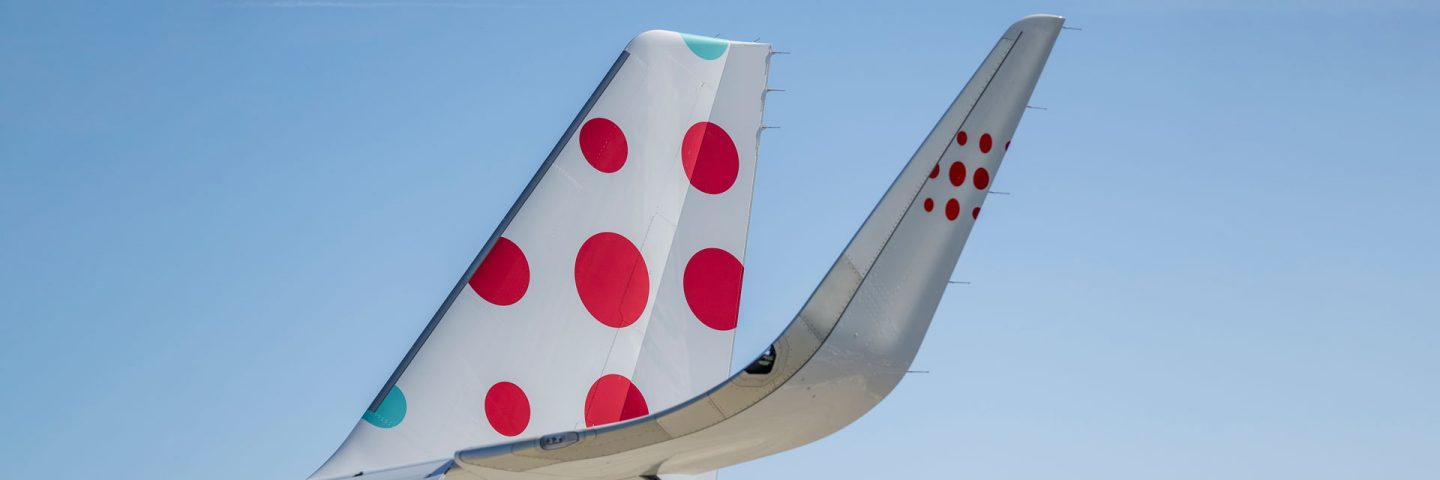

Our 9 principles of Respectful Flying

  • 13 Airbus A320neos by 2027
  • 50% smaller noise footprint
  • Up to 20% less CO2

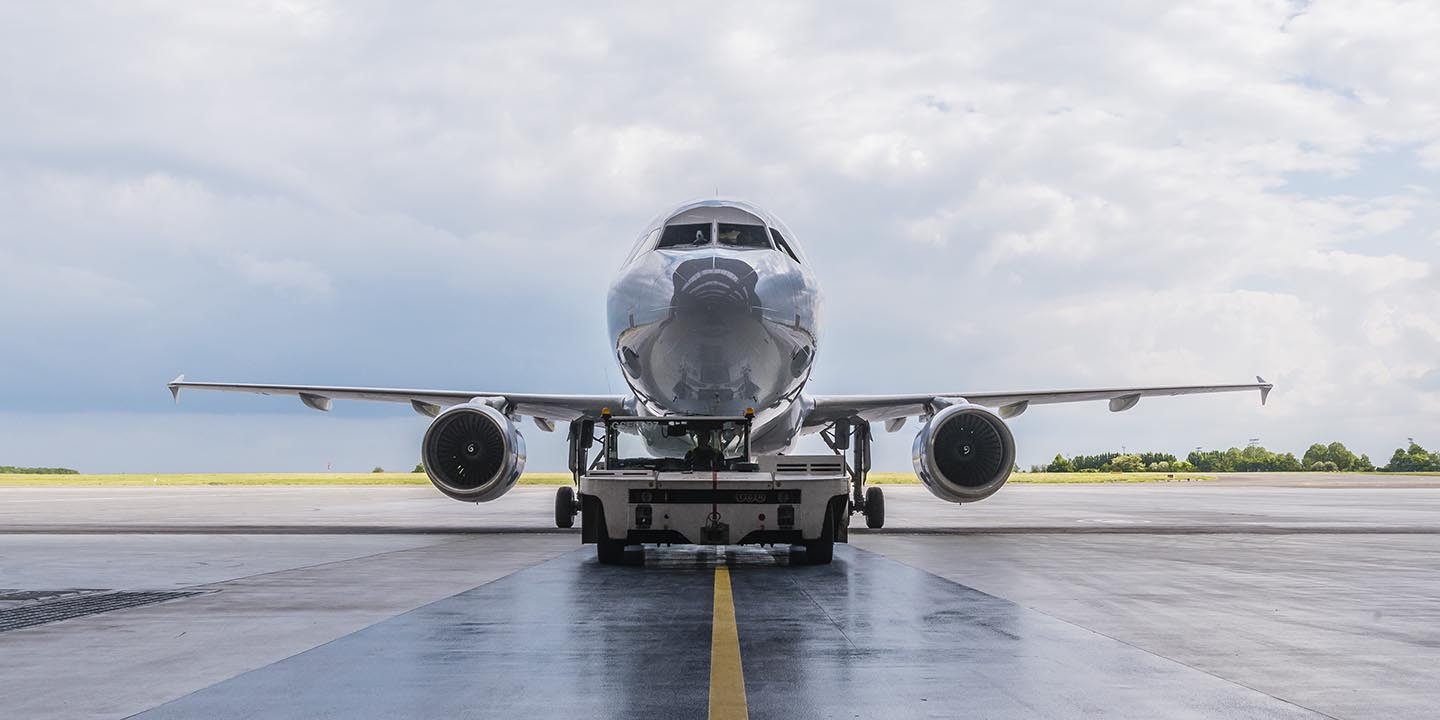
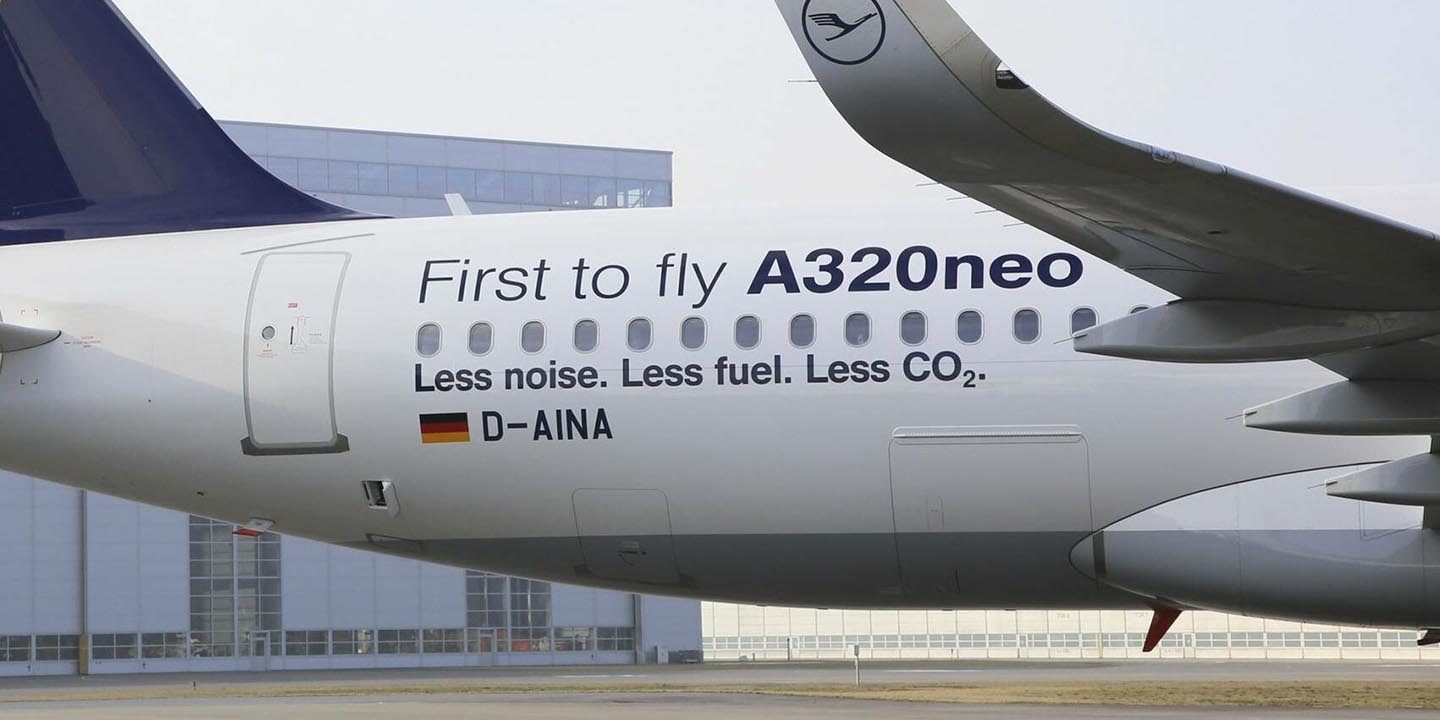
Reducing an airline’s environmental footprint starts with its main assets, our planes. In July 2026, the first phase of fleet modernization was completed by inaugurating our eighth A320neo. The A320neo has an approximately 50% smaller noise footprint, is more fuel efficient and reduces carbon emissions by up to 20%, compared to our current A320.

Several factors contribute to the Airbus A320neo’s reduced carbon emissions:

Advanced Aerodynamics
The Airbus A320neo has an advanced aerodynamic design that reduces wind resistance while flying and improves fuel efficiency. This results in a reduction of up to 800 tons of CO2 per aircraft every year, compared to the A320ceo.

Efficient engines
The Airbus A320neo is equipped with modern and efficient engines designed to burn fuel more efficiently. They deliver a significant reduction in CO2 emissions of up to 3,000 tons per year, compared to our current A320. As of July 2026, the eight new aircraft have already saved a total of approximately 18.75 million kilograms of fuel and prevented about 60,000 metric tons of CO₂ emissions, compared to the previous-generation A320ceo.

Advanced avionics
The Airbus A320neo is equipped with advanced communication and navigation equipment and flight management systems. These allow optimized flight paths, better navigation, and more precise control over aircraft performance. They help pilots to make more fuel-efficient decisions, further reducing CO2 emissions.

  • At least 80% less lifecycle GHG emissions, compared to conventional kerosene*
  • Produced from used cooking oils and fats or from agricultural waste

Sustainable Aviation Fuel (SAF) is an alternative jet fuel made from renewable sources. While SAF generates comparable CO₂ emissions to conventional kerosene during combustion, the SAF used by Lufthansa Group achieves at least 80% lower lifecycle greenhouse gas emissions on average. 

Your contribution funds additional SAF beyond the EU-mandated 2% quota already included in ticket prices. The amount is calculated based on your estimated flight-related CO₂ emissions and used on future Lufthansa Group flights within six months of your flight, though not on your own flight. Parts of Lufthansa Group's SAF purchases have received EU ETS support. 

SAF feedstocks do not compete with food production and must meet strict EU sustainability criteria under RED II and ReFuelEU Aviation, verified by independent auditors. SAF currently accounts for less than 1% of global aviation fuel consumption and around 1.5% of Lufthansa Group's fuel use (2025). Customer-funded SAF represents only a portion of these purchases. 

While SAF contributes to lower lifecycle emissions, aviation continues to have a significant climate impact, including effects beyond CO₂. The Lufthansa Group is involved in numerous projects to ensure that SAF becomes available in larger quantities as quickly as possible. 

As part of our commitment towards more efficient operations, we’re actively taking steps to reduce our carbon footprint. Brussels Airport is one of the two Belgian airports connected to the NATO pipeline, which not only allows us to transport kerosene, but since 1 January 2023 also Sustainable Aviation Fuel (SAF). Brussels Airlines was the very first airline in Belgium who transported SAF through this NATO pipeline.

* For SAF used by the Lufthansa Group, cCalculated with established life cycle assessment (LCA) methodologies, such as CORSIA.

  • Choose our Lufthansa Group Impact Fares
  • Add one of our CO2 saving packages to your standard fare

Impact Fares complement our efforts of contributing to future CO2 emission savings by giving customers the opportunity to support this transition. While the fare does not make an individual flight itself sustainable, it supports concrete measures that contribute to emission savings. These include the use of additional Sustainable Aviation Fuel (SAF) on future flights and selected climate protection projects that contribute to CO₂ avoidance or removal. 

In addition, you can choose one of our CO2 savings packages, that include SAF and an additional support of climate protection projects.

Flying has further impact on the climate beyond CO2 emissions.

  • Up to 12,000 tonnes of CO₂ saved in 2026 through more efficient operating procedures and projects as part of the Lufthansa Group “OPS Sustainability” Program
  • Introduction of AeroSHARK technology by the Lufthansa Group

In our daily operations, from the planning of the flight to the operations at the ground and in the air, our goal is to limit our fuel and thus carbon emissions. With that in mind, we implemented the so-called Single Engine Taxi-in operation, which means switching off one of the aircraft’s engines when it taxies to the gate after landing. 

The Lufthansa Group “OPS Sustainability” Program includes several other initiatives which increase both economic and ecological efficiency. Improved software implementations, optimized procedures, and increased application rates of best practices all lead to more efficient flights, resulting in lower emissions. In one recent example, the Lufthansa Group and Lufthansa Technik  introduced AeroSHARK, the only certified and proven sharkskin technology. AeroSHARK is a durable bionic film that imitates the texture of sharkskin to optimize aerodynamic performance. By reducing drag, it enables significant fuel savings and lowers CO₂ emissions across long-haul operations . Within the Lufthansa Group, a total of 22 aircraft—operated by SWISS, Lufthansa Cargo, Austrian Airlines, and Lufthansa—have been equipped with the fuel-saving riblet film.

  • The train or bus as an ideal partner for very short distances
  • A respectful way to reach the airport

You could say the most environmentally friendly flight is the one that never takes off. This isn’t very helpful for people travelling long haul or those who travel to destinations that are difficult to reach by other means of transportation, but it can be an alternative for those travelling short distances. With this in mind, we encourage our passengers to use alternative modes of transport, whenever possible, such as the train when travelling between short-haul airports (Brussels - Amsterdam for example), or the bus. Since September 2026, the new Express Rail partnership between Brussels Airlines and Deutsche Bahn enables customers to arrive directly at Brussels Airport from Cologne, Aachen or Liège.

Together with Brussels Airport, we want to increase our intermodal (train, tram, bus, etc.) offer to our passengers. Work on the Airport Tramway connecting the airport to the centre of Brussels in no more than 30 minutes is planned to come into service from 2031/2032. In the meantime, we’re pushing the intermodal masterplan for our airport to the top of the government’s agenda, including a direct high-speed train connection.

  • Only digital newspapers
  • Reduction of single-use plastics and aluminium items on board 
  • Better recycling efforts 

Less single-use plastics, more recyclable materials, less food waste. We have a very clear strategy for reducing our waste. 

Waste reduction requires a wide range of initiatives across different areas. By 2025, we achieved our goal of reducing food waste on short-haul flights by 50%. In addition, the vast majority of single-use plastic and single-use aluminium items have been removed from the onboard experience by 2025. A limited number of items will remain where suitable alternatives are not yet available on the market.

And to reduce food waste, we implemented a 50% discount on food near its expiry date on flights after 8 PM.

A few other examples illustrate the broad scope in which we operate. We successfully eliminated paper reading material. Our lounges and our cabins have undergone a digital transformation, so that newspapers and magazines are available in digital formats only. In addition, our lounges no longer offer plastic water bottles. Instead, we’ve installed Grohe water filter taps as well as re-usable food and beverage containers to replace individual portions and cans. 

Since 2024, we have increased the recyclability of the packaging of all hot meals offered through our Buy-on-Board menu. Furthermore, we have introduced separate waste collection on board to improve recycling rates. We’re also increasing our focus on local sourcing in Belgium for selected products, such as the new Business Class and Premium Economy pillows rather than sourcing them from overseas suppliers.

  • Creating tens of thousands of direct and indirect jobs in Belgium
  • Numerous collaborations with Belgian partners
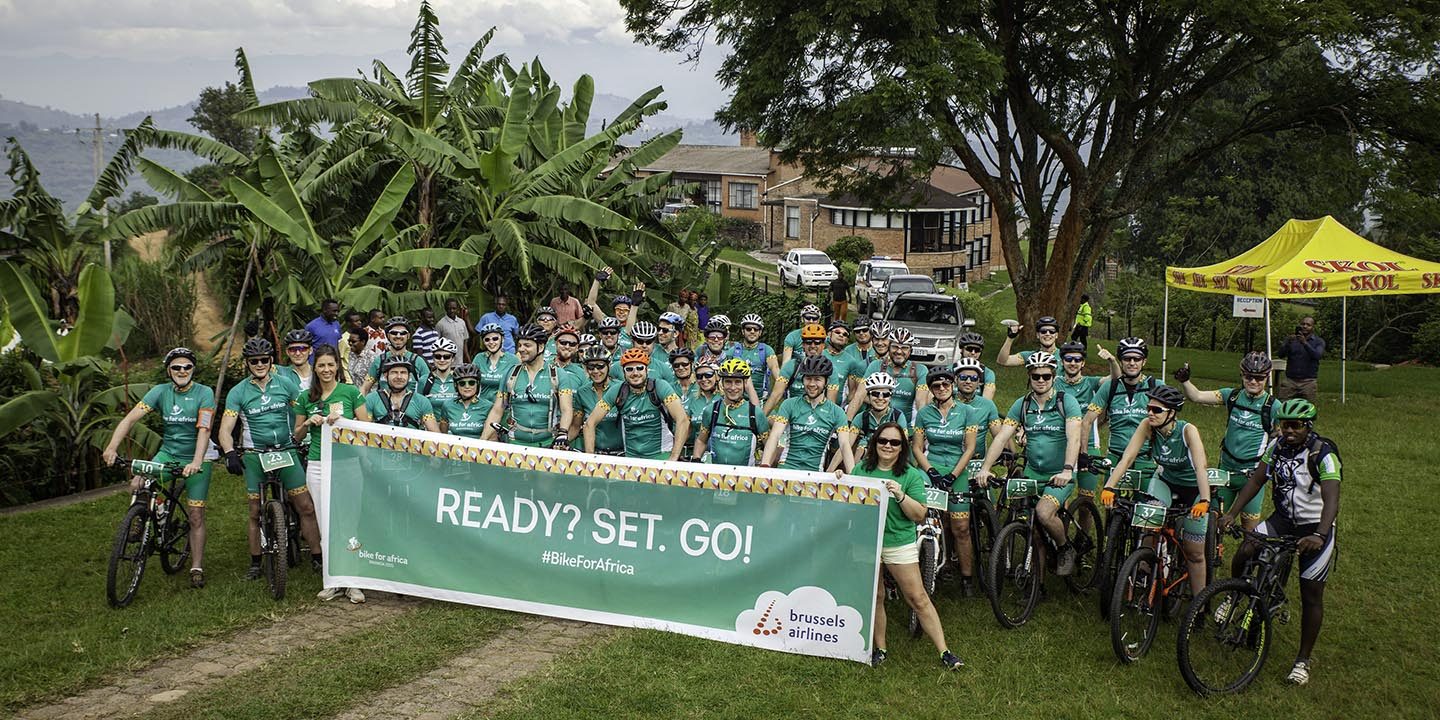
  • Bike/Hike In Africa: Workshops and training sessions to help local entrepreneurs

We’re a Belgian airline, which comes with a responsibility. We’re one of the biggest employers in Belgium, creating tens of thousands of jobs, both directly (over 3,000 jobs at Brussels Airlines alone) and indirectly. Our core business, flying people and cargo to and from Belgium, fuels the Belgian economy. That works both ways, we seize every opportunity to support local Belgian companies. And we do the same abroad, focusing on Africa.

Being a Belgian airline is also reflected in the numerous collaborations and partnerships we have with Belgian creative minds, be they artists, cooks, or craftsmen. At Brussels Airlines, we support the local economy by favouring local suppliers and encouraging innovation by supporting young creatives. Our local partnerships give a voice to aspiring Belgian creators as well as to better known businesses. We bring the world to Belgium and the best of Belgium to the world. 

Our Belgitude is an important feature for us. That’s why all our onboard meals are made with seasonal products, provided by local partners. Think Foodmaker, Neuhaus, Van Tricht cheese delicacies, IJsboerke, etc. Think Belgian beers or long-haul flight meals and cocktails respectively created by Michelin-starred Belgian chefs and famous Belgian mixologists. But also think local artisans (leather craftspeople, painters, etc.) designing an amenity kit for our Business travellers, Belgian skincare included. By showcasing the best of Belgium to our travellers, we add a touch of excitement to their journeys.

Supporting the local economy doesn’t stop at our Belgian borders. We apply the same philosophy to all our destinations. More specifically, in Africa we give strong support to the local economy. We believe in Africa’s potential and strive to build partnerships wherever possible. Through our b.foundation for Africa, we support NGOs that provide medical care, as well as local entrepreneurs and businesses in developing their activities further in a sustainable manner. In the context of our bi-annual ‘Bike/Hike In Africa’ project, we organize workshops and training sessions in various local companies to help develop their business.

  • Over 60 nationalities
  • More than 50 female pilots

As an airline company we unite the world. We’re an open company. Inclusion in all its forms is a vital part of our corporate mission. We practice what we preach. We welcome talented people regardless of their ethnicity, religion, age, gender, or sexual identity and orientation. Diversity, inclusion and multiculturalism are at the heart of Brussels Airlines. We couldn’t be more proud of our team representing over 60 nationalities with varying gender identities, cultures, and beliefs. The same goes for our international customers, anyone who flies with us is welcome, regardless of their background. Whatever continent you’re from, you feel at home with us.

If you take only Brussels Airlines itself into account, we employ over 3,000 people in Belgium and more than 250 people in Africa. But if you look at the larger picture, we provide employment indirectly to many other contractors and third parties. Keeping all of those people happy is very important to us.

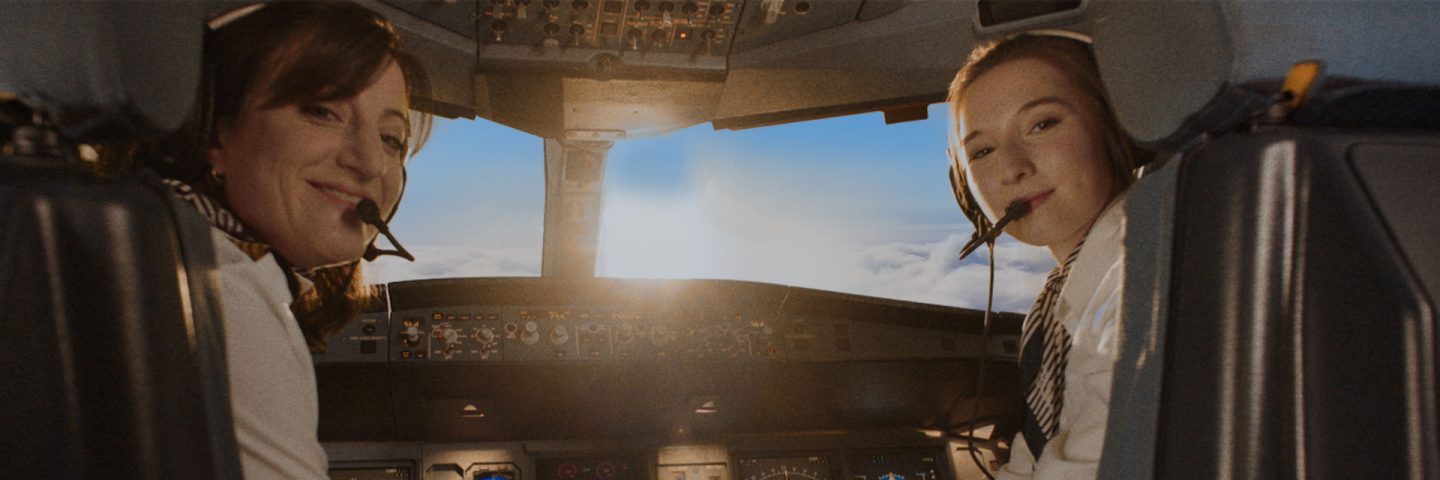
That’s why diversity and inclusion are two of our greatest and most cherished assets. We’re proud of our team which includes over 60 nationalities of different ages, gender identities, cultures, and beliefs. We invest a great deal in training all our personnel and encourage women into leadership positions. Just one figure illustrating how our efforts are paying off is that 10% of our pilots are female, which is well above the industry average of 6%. Additionally, we partner with high schools, start-ups and universities to nurture talents and boost innovation. 

Our employees’ happiness is key, we provide them with a safe working environment (LGBTQ+ friendly) and a healthy work/life balance on top of fair wages and attractive fringe benefits (e.g. a group insurance and public transportation discounts).

  • 24/7 available
  • Families sit together
  • Our smile and respect is always included

Respectful Flying starts with respecting the customer. We treat every passenger with the utmost respect. This also shows in our customer service. Being available 24/7, is something we strive for, every day.

Brussels Airlines always puts respect, honesty, and fairness upfront. Not least in our relations with suppliers where we apply a zero tolerance policy to unethical business behaviour.

We offer tailored services at fair prices to meet diverse passenger needs, ensuring a seamless and enjoyable travel experience. Our ‘family comes first’ policy guarantees seating together, special assistance for unaccompanied children and great flexibility for families travelling with small children (e.g. priority boarding or free stroller check-in). 

Together with The Human Link, Brussels Airlines also offers a “Fear of Flying” course. We also show our respect through a wide choice of different meals, specially created to meet differing religious or dietary needs. Furthermore, we offer Special Assistance for passengers with specific needs or Pet Care services which prioritize the well-being of our furry friends.

Related topics